
Introduction
AWS DevOps in 2026 focuses on automation, scalability, and reliability. It combines cloud-native tools with modern engineering practices. You already understand CI/CD, infrastructure as code, and monitoring. Now you must move toward advanced implementation. You must build real systems. You must optimize pipelines. This stage defines your career growth and technical depth. Aws Devops Course helps you build advanced CI/CD pipelines and manage scalable cloud infrastructure in real-world DevOps environments.
1. Build Production-Grade CI/CD Pipelines
You must move from basic pipelines to enterprise-grade CI/CD systems.
- Use AWS CodePipeline with multi-stage deployments
- Integrate AWS CodeBuild with containerized build environments
- Implement blue-green deployment using AWS CodeDeploy
- Add manual approval gates for controlled releases
- Use artifact versioning with Amazon S3
Focus on pipeline resilience. Handle rollback automatically. Add failure alerts.
Key concept: Pipeline as a product.
2. Master Infrastructure as Code at Scale
After mastering IaC, focus on learning scalability and modular design in AWS DevOps.
- AWS CloudFormation StackSets helps with multi-region deployment
- Reusable Terraform modules must be written for speed
- Use remote backends like S3 + DynamoDB for state management
- Version control must be applied to infrastructure definitions for efficiency
- Parameterization must be used for dynamic environments
Example Syntax (Terraform)
resource “aws_instance” “web” {
ami = “ami-0abcdef12345”
instance_type = “t3.micro”
tags = {
Name = "DevOps-Server"
}
}
The above syntax declaratively defines infrastructure and ensures more repeatability.
3. Implement Observability and Monitoring Systems
Monitoring is not enough. You need full observability.
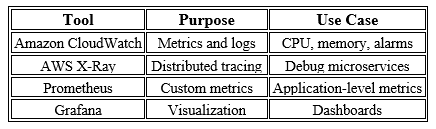
You must track system health deeply.
- Use structured logging
- Implement tracing across services
- Set anomaly detection alerts
- Correlate logs with metrics
This improves root cause analysis speed.
4. Work with Containerization and Kubernetes
Containers play a major role in modern DevOps.
- Docker must be used to generate containers
- Professionals must push the images to Amazon ECR for efficiency
- Amazon ECS or Amazon EKS must be used to deploy the containers
- Configure auto-scaling as per the load
- Sensitive data must be managed using AWS Secrets Manager
Key Focus Areas
- Focus on pod lifecycle management
- Apply service mesh basics
- Perform load balancing using ALB
Additionally, skills in cluster-level operations help one work with AWS DevOps more effectively.
5. Learn DevSecOps Implementation
It is important to integrate security into the AWS DevOps pipelines.
AWS IAM helps improve fine-grained access control
Least privilege policies must be applied for higher security
Images must be scanned using Amazon Inspector
Use AWS WAF to improve application security
AWS KMS must be used for data encryption
Security Pipeline Steps
- Perform static code analysis
- Scan all vulnerabilities in dependencies
- Container images must be scanned properly
- Ensure runtime protection
Deployments become highly secure with the above processes.
6. Optimize Cloud Cost and Performance
Cost optimization is an important DevOps skill every professional must learn in 2026.
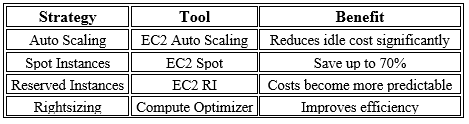
Actions You Must Take
- Unused resources must be monitored constantly
- Lifecycle policies must be used for better storage
- Optimizing database queries improves work
- Caching must be enabled with Amazon ElastiCache for efficiency
Professionals need to strike a balance between performance and cost. The AWS Certified DevOps Engineer course is designed for beginners and offers the best hands-on training opportunities under expert guidance.
7. Work on Real-Time Data Pipelines
DevOps now supports data engineering workflows.
- AWS Kinesis must be used for real-time streaming
- Use AWS Lambda for data processing
- Amazon S3 or Redshift helps with result storage
- Step Functions must be used to automate workflows
Use Cases
- AWS DevOps helps with log processing
- It improves real-time analytics
- Event-driven architectures work well with AWS DevOps
This ensures greater role for professionals in the data systems.
8. Build Microservices Architecture
You must design distributed systems.
- Monolith must be broken down into smaller services for efficiency
- API Gateway helps with routing tasks
- Professionals need to deploy services independently
- Service discovery mechanisms improve work
- One also needs to handle inter-service communication tasks
Important Concepts
- Learn about the circuit breaker pattern
- Apply retry logic
- Ensure better fault tolerance
Microservices make systems highly flexible.
9. Contribute to Open Source and Automation Tools
You must build visibility in the DevOps ecosystem.
- Work with Terraform modules
- Ficus on generating reusable GitHub Actions
- CLI tools must be built using Python or Go
- Share scripts for proper automation
Benefits
- The coding skills of professionals improve
- Helps with portfolio building
- Gain recognition in the AWS DevOps community
Those planning tor grow in the AWS DevOps career must follow the above guidelines.
10. Prepare for Advanced Roles and Certifications
After AWS DevOps, you must target specialized roles such are the ones below.
- DevOps Architect
- Site Reliability Engineer (SRE)
- Platform Engineer
- Cloud Security Engineer
Certifications to Consider
- AWS Certified DevOps Engineer Professional Certification
- AWS Solutions Architect Professional Certification
- Kubernetes Administrator (CKA) Certification
One needs deep knowledge of AWS, DevOps, cloud platforms, etc.
Conclusion
After learning AWS DevOps, you must shift from theory to real-world execution. One can join the DevOps Online Course to learn every industry-relevant AWS DevOps skill along with hands-on practice sessions. Professionals must focus on automation, scalable systems, and high security. Build complex pipelines. Manage distributed systems. Optimize cost and performance. Work with containers and observability tools. This approach will make you industry-ready. It will also open advanced career paths in cloud and DevOps engineering.